

Qué es el Corte César
Por años de experiencia observando tendencias ir y venir en la barbería, el corte César siempre se ha mantenido vigente porque es clásico, atemporal y todavía se siente moderno y actualizado hoy en día. Es un corte corto y de bajo perfil, diseñado para hombres, niños y jóvenes que buscan algo masculino, profesional y adecuado para ambientes de negocios, formales, casuales o incluso elegantes.
Lo que lo hace especial es lo versátil, limpio, ordenado y estructurado que se ve, con una forma uniforme, equilibrada e intencional que se siente natural y ajustada, aportando verdadera confianza y un fuerte atractivo de cuidado personal.

He visto cómo oculta hábilmente pequeñas imperfecciones, se adapta a diferentes rasgos y encaja en muchas variaciones y entornos, desde el trabajo diario hasta el deporte, actividades y otras rutinas de alta energía. También es conocido por ser de fácil mantenimiento, por lo que muchos clientes siguen regresando a él.

Historia del Corte César
El corte César se remonta a la Antigua Roma y lleva el nombre de Julio César, una de las figuras más poderosas de la historia. Las esculturas y monedas históricas suelen mostrarlo con un cabello corto, limpio y estructurado, combinado con un flequillo hacia adelante, un look que se cree ayudaba a ocultar imperfecciones tempranas en la línea del cabello, manteniendo a la vez una apariencia masculina, disciplinada y autoritaria que proyectaba confianza.
Orígenes en la Antigua Roma
En la sociedad romana, los peinados reflejaban poder, orden y control. Un corte de bajo perfil, uniforme y equilibrado era práctico para soldados y líderes, haciendo innecesario e impráctico el cabello largo. El estilo César se mantenía ordenado, limpio e intencional, enmarcando la frente y manteniendo un perfil fuerte que simbolizaba liderazgo y disciplina militar.
Por qué Julio César lo hizo famoso
La imagen de Julio César se difundió ampliamente a través de estatuas, bustos y monedas, haciendo que su peinado fuera instantáneamente reconocible en todo el mundo romano. A medida que su influencia crecía, el look clásico se asoció con autoridad, fuerza y liderazgo. Con el tiempo, el flequillo corto hacia adelante se convirtió en un símbolo de poder, ayudando a consolidar el legado duradero de este corte en el cuidado personal masculino.
Resurgimiento en el cuidado personal masculino moderno
El corte César vivió un fuerte resurgimiento a finales del siglo XX, especialmente durante los años 90, cuando atletas y celebridades adoptaron su atractivo limpio y profesional. Dentro de la barbería moderna, el estilo se volvió más actualizado con técnicas de taper y fade en los laterales y la nuca, una parte superior ligeramente más larga y acabados texturizados y desordenados que incluso funcionan bien con cabello rizado.
Por qué el corte César sigue siendo importante hoy
Hoy en día, el corte César sigue siendo popular porque es:
De fácil mantenimiento, versátil, adecuado para niños y hombres jóvenes, adaptable a ambientes de negocios, formales y casuales, eficaz para ocultar pequeñas imperfecciones, flexible con variaciones modernas, práctico para deportes, actividades diarias y otros estilos de vida de alta energía, y verdaderamente atemporal pero elegante.

Variaciones Populares del Corte César
- Corte César Clásico – Flequillo corto y recto
- Corte César Moderno – Acabado texturizado y actualizado
- Corte César Corto – Ultra limpio, longitud mínima
- Corte César Largo – Más longitud y flexibilidad
- Corte César Texturizado – Parte superior desordenada y en capas
- Corte César Desordenado – Look relajado y natural
- Corte César con Fade – Laterales degradados y marcados
- Corte César con Taper – Laterales sutiles y limpios
- Corte César con Low Fade – Contraste de fade suave
- Corte César con Mid Fade – Fade moderno y equilibrado
- Corte César con High Fade – Contraste marcado y audaz
- Corte César con Skin Fade – Fade ultra limpio
- Corte César con Drop Fade – Forma de fade curva
- Corte César con Burst Fade – Fade redondeado alrededor de la oreja
- Corte César para Entradas – Disimula la línea del cabello sutilmente
- Corte César para Hombres Negros – Ondas texturizadas y limpias
- Corte César para Hombres Negros sin Fade – Longitud uniforme y natural
Comparación del Corte César con Otros Cortes
Corte César vs French Crop
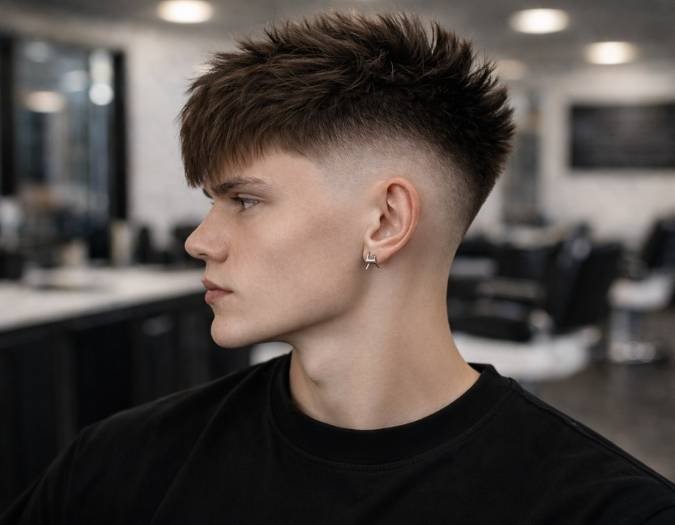
Por mi experiencia detrás de la silla, suelo explicar esto empezando por el French crop, porque se siente más relajado en el uso diario. El French crop usa un flequillo más largo y texturizado, que añade longitud visible y da más flexibilidad a la hora de peinar, creando un ambiente casual y moderno que le queda bien a hombres que prefieren movimiento y un acabado más suave.
Al compararlo con el corte César, la diferencia se vuelve clara: el corte César se basa en un flequillo más corto y recto para crear un look nítido y clásico que se mantiene ordenado con mínimo esfuerzo. Ambos estilos funcionan bien, pero elegir entre ellos depende realmente de si prefieres una estructura controlada o una textura relajada.
Corte César vs Crew Cut
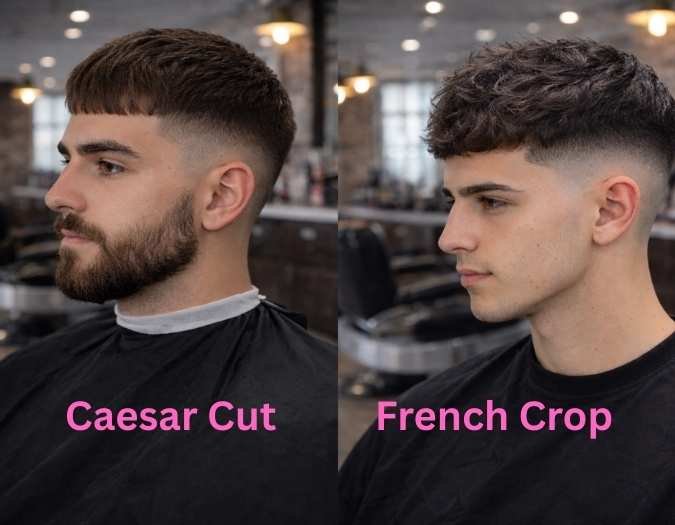
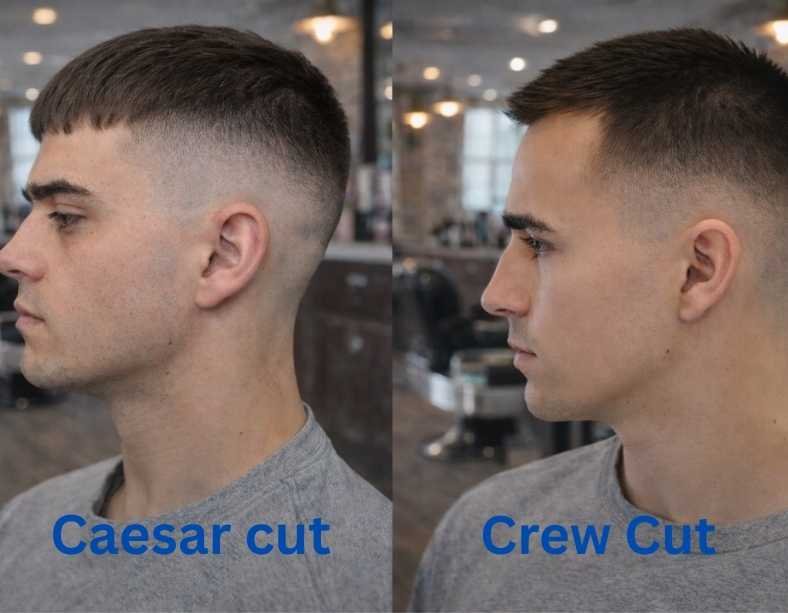
En mi experiencia, suelo explicar esta elección de estilo empezando por el crew cut, porque es más corto, se acerca más a un buzz cut, y se siente instantáneamente más marcado y de menor mantenimiento para el día a día. El crew cut presenta una forma limpia que hace sencillo el arreglo, especialmente para hombres que quieren un look sin complicaciones.
Al pasar al corte César, la diferencia se vuelve obvia: ofrece un flequillo recto con longitud uniforme en la parte superior, creando un estilo estructurado que añade más versatilidad sin necesitar demasiado tiempo de peinado.
Corte César vs Fringe
El estilo fringe se enfoca en un peinado flexible y movimiento visual, usando a menudo un flequillo más largo y texturizado que añade longitud notable y crea una apariencia casual y moderna. Esto hace que los cortes con fringe sean ideales para hombres que prefieren un look relajado y expresivo.
En cambio, el corte César se define por un flequillo recto con un borde marcado, ofreciendo un estilo limpio y estructurado que se ve nítido y controlado con mínimo esfuerzo. La diferencia está entre libertad y estructura, haciendo que cada opción se adapte a preferencias de estilo distintas.

Corte César vs Buzz Cut
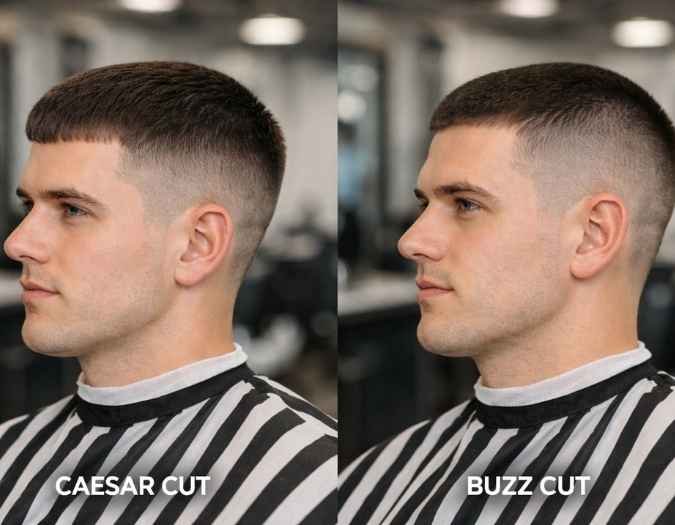
El buzz cut es extremadamente más corto, cortado de forma uniforme y muy cerca del cuero cabelludo, y es conocido por ser de muy bajo mantenimiento, lo que lo convierte en una opción práctica para hombres que quieren un look limpio y marcado sin peinado diario.
En comparación, el corte César mantiene un flequillo recto con longitud uniforme en la parte superior, lo que añade definición y un estilo más estructurado. Mientras que el buzz cut se enfoca en la simplicidad y facilidad, el corte César ofrece más versatilidad y forma visual sin volverse exigente.
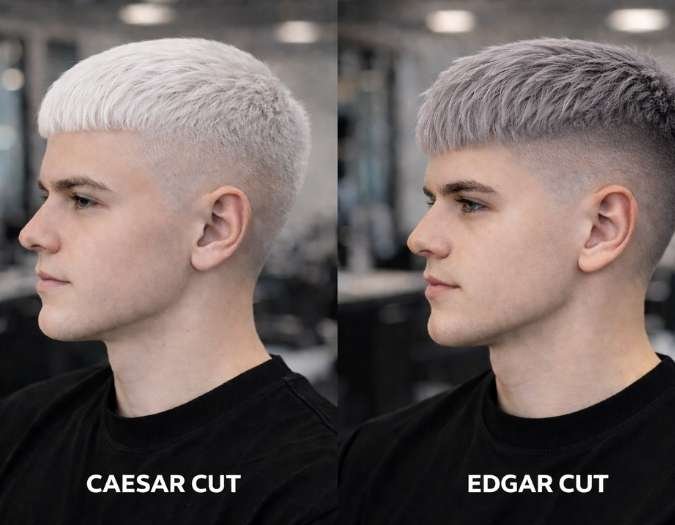
Corte César vs Edgar
El corte Edgar es conocido por su flequillo recto y marcado, y su contorno muy limpio y definido, a menudo combinado con laterales ajustados para crear un look audaz y llamativo. Se siente más agresivo y orientado a la tendencia, especialmente popular entre hombres jóvenes que buscan un estilo con mucha personalidad.
En cambio, el corte César usa un flequillo recto con una longitud más suave y uniforme en la parte superior, dando un estilo equilibrado y estructurado que se ve clásico y controlado. Mientras el Edgar destaca por su borde dramático, el corte César se enfoca en la simplicidad, versatilidad y facilidad de uso diario.
Cómo Hacerte un Corte César en Casa
Cómo Hacerte un Corte César en Casa
Lo que Necesitas
Máquina de cortar (con guías), tijeras, peine, pinzas para el cabello (opcional), espejo de mano + espejo de pared, botella de spray, capa/toalla.
Paso 1: Empieza con la condición correcta del cabello
Lava y seca tu cabello, luego rocíalo ligeramente para que quede algo húmedo (es más fácil de controlar). Peina todo hacia adelante.
Paso 2: Define primero la longitud superior
Elige una longitud objetivo para la parte superior (la mayoría de los cortes César son cortos).
- Si usas máquina: usa una guía más larga y avanza suavemente de adelante hacia atrás.
- Si usas tijeras: corta pequeñas cantidades y mantén la parte superior pareja.
Paso 3: Crea la línea del flequillo César
Peina el cabello hacia adelante sobre la frente. Corta un flequillo recto a lo largo.
- Empieza por el centro, luego iguala ambos lados.
- Corta poco a poco: esta es la parte más notoria.
Paso 4: Combina la parte superior con los laterales
Decide qué tan ajustados quieres los laterales (el César clásico es ordenado, no extremo).
- Usa una guía ligeramente más corta en los laterales que en la parte superior.
- Trabaja despacio en ambos lados para mantener la simetría.
Paso 5: Limpia la parte de atrás
Recorta la parte de atrás con la misma guía que usaste en los laterales. Mantén la forma natural y equilibrada, no demasiado alta.
Paso 6: Suaviza las transiciones
Usa un peine y tijeras (o una guía ligeramente más larga) para eliminar cualquier escalón brusco donde la parte superior se une con los laterales.
Paso 7: Bordes y detalles
Limpia con cuidado alrededor de las orejas y la nuca. No empujes demasiado la línea del cabello hacia atrás, solo ordénala.
Paso 8: Revisión final y ajustes
Seca completamente, peina hacia adelante de nuevo, y revisa desde el frente, los lados y atrás en los espejos. Haz pequeños ajustes para mantener la parte superior uniforme y el flequillo recto.
Nuestra Opinión sobre el Corte César
El flequillo es donde un corte César realmente muestra su carácter, porque cuando está hecho a la medida de cada persona, el corte se ve mejor al instante y naturalmente equilibrado. Si queda demasiado corto, el resultado puede verse duro, mientras que dejarlo crecer demasiado a menudo hace que el estilo se vea plano, por eso el control cuidadoso es tan importante.
La clave está en angular el flequillo correctamente, difuminar los laterales y dar forma a la parte superior para que se ajuste a la frente, la coronilla y la dirección natural del cabello. Cuando se trata como un corte preciso y se hace bien, el César consistentemente se ve mejor que casi cualquier otro corte corto.